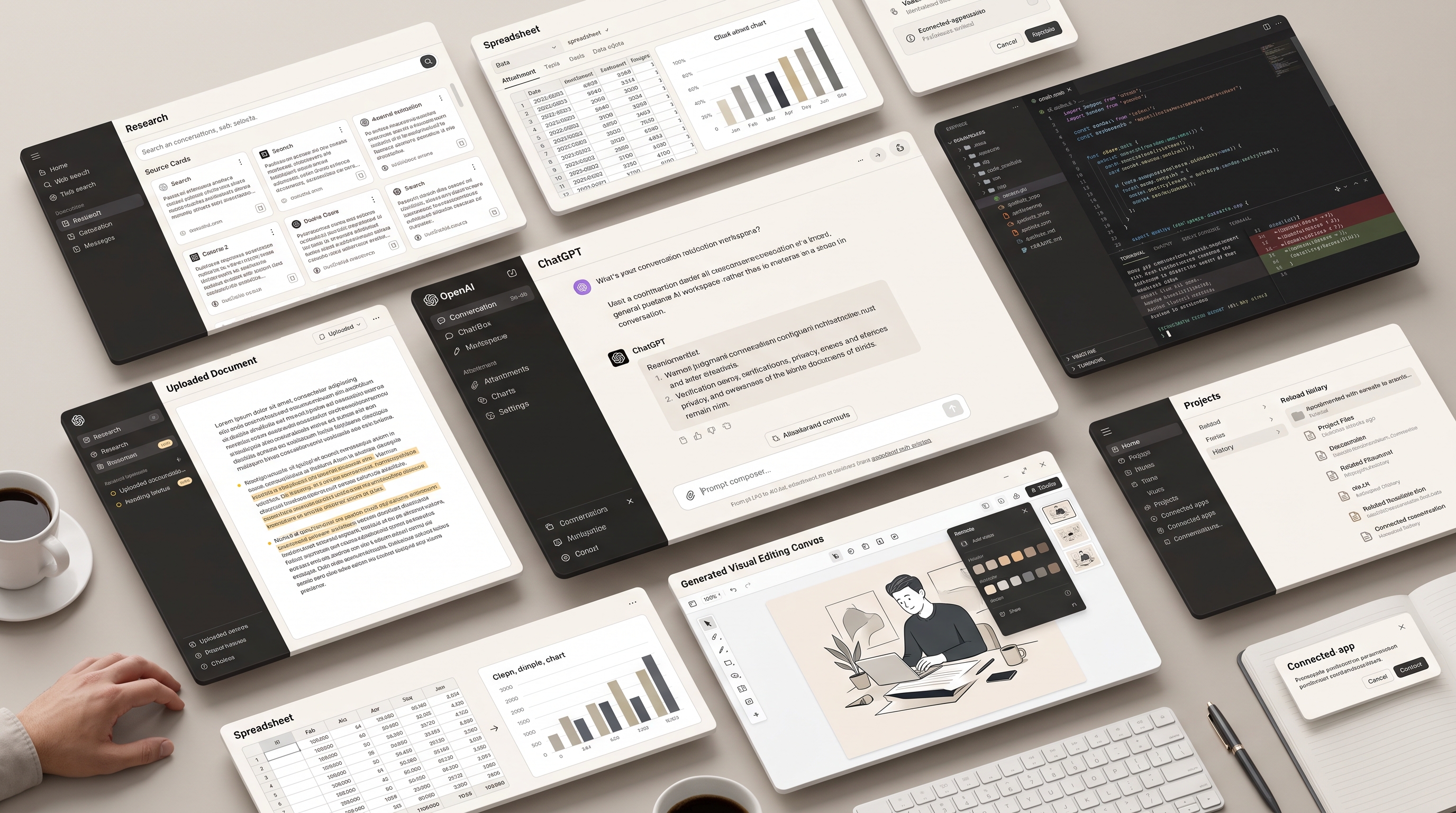
ChatGPT is a general-purpose AI assistant that now covers everyday chat, web search, file analysis, image generation, voice, research, connected apps, custom GPTs, longer Work tasks, and coding through Codex. That range is its biggest advantage. It is also the reason a simple price comparison can be misleading. The useful plan depends on how often you use advanced tools, how sensitive your data is, and whether you need a personal account or a managed team workspace. This research-based review explains where ChatGPT fits, where it does not, and what to check before paying.

Product profile
ChatGPT
See ChatGPT’s BettrList score, current plan summary, supported platforms, and official link.
ChatGPT review: quick verdict
ChatGPT is recommended with caveats. It is a strong fit for freelancers, creators, students, researchers, developers, and small teams that want one flexible AI workspace for writing, analysis, research, and code. The Free plan is a useful starting point, while Plus is the most practical paid plan for many individuals who need deeper reasoning, file work, Deep Research, Projects, scheduled tasks, custom GPTs, and broader Codex access. The decision is not universal because usage limits change, model names move, personal plans require deliberate data controls, and Business starts with two seats.
- Best reason to choose ChatGPT: it brings several useful AI workflows into one familiar conversation and keeps adding tools around that core.
- Main weakness: feature access and limits vary by plan, model, country, workspace, and demand, so a feature list does not guarantee unlimited use.
- Best starting point: Free for occasional work, Go for more room at a lower price where available, and Plus for regular research, writing, analysis, and coding.
- What to check first: whether your data can be processed in a personal workspace, whether you need shared administration, and whether the separate API platform is what you actually need.
What is ChatGPT?
ChatGPT is a conversational AI product from OpenAI. The basic experience is a chat where you can ask questions, rewrite text, explain an idea, analyze an uploaded file, search the web, or ask for a structured deliverable. Around that chat are tools for voice, images, data analysis, memory, Projects, Deep Research, connected apps, custom GPTs, Work, and Codex.
The underlying models and plan names change often. OpenAI’s current pricing page uses GPT-5.6 model names and describes different access levels across Free, Go, Plus, and Pro. That makes ChatGPT different from a fixed desktop application. Buyers are paying for a changing service, not a permanent version of one model. The sensible question is whether the current limits and tools solve your work today, not whether one model name will remain available for the length of a subscription.
Who is ChatGPT designed for?
ChatGPT is designed for people who need help across several kinds of work. A solo consultant can use it for proposals, meeting notes, research, and analysis. A creator can use it for outlines, scripts, image ideas, and editing. A developer can use Codex for repository work. A small team can use Business for a shared workspace, centralized billing, admin controls, and workspace data that is not used to train models by default.
It is a weaker fit for a buyer who needs a narrow, predictable application with no model changes, a regulated workflow that cannot use a personal workspace, or a production application that needs an API rather than a ChatGPT subscription. ChatGPT Business does not include API usage. Enterprise is the sales-led path when a larger deployment or contracted controls are required.
ChatGPT features that matter in practice
Chat, Work, and Codex
The standard Chat experience is best for quick questions, brainstorming, search, and everyday assistance. OpenAI describes Work as a longer-running experience for research, analysis, and finished documents, spreadsheets, presentations, reports, or Sites. Codex remains focused on software development. It can work with code, repositories, terminals, and developer tools in the desktop app. This split matters because a short answer, a multi-step report, and a code change have different review and permission needs.
Files, data analysis, and images
ChatGPT can accept common document, spreadsheet, presentation, and text formats such as PDF, DOCX, PPTX, XLSX, CSV, and TXT. It can summarize, extract information, analyze structured data, and create visual outputs. It can also analyze images and generate or edit images. The practical benefit is less tool switching. The limitation is that upload access, image speed, analysis depth, and file retention depend on the plan and workspace. A file workflow still needs a human check for missing context, calculation errors, and confidential material.
Search and Deep Research
Search is useful for a quick current answer with links. Deep Research is a more deliberate workflow. OpenAI says it can use the public web, uploaded files, and enabled apps, then produce a documented report with citations or source links. You can review its research plan, change the allowed sources, watch the work, and download the result. That makes it useful for market scans, literature reviews, product research, and briefing documents. It does not remove the need to check sources, especially when a decision depends on an exact number or a legal, medical, or financial claim.
Memory, Projects, and custom GPTs
Memory can retain useful context such as preferences, goals, and working habits. Projects keep chats and files around a shared context. Custom GPTs add instructions, conversation starters, uploaded knowledge, and selected capabilities for repeat tasks. These features can turn ChatGPT from a blank chat box into a personal working environment. They also create more data and permission decisions. GPTs that use apps or external APIs can send relevant parts of a request to third parties, and GPTs do not use saved memory or previous conversations.
Connected apps and integrations
ChatGPT apps connect external tools and data to a conversation. Depending on the app and plan, ChatGPT can search connected information, use it in Deep Research, sync content for faster access, or take an action after confirmation. App availability can vary by country, plan, and workspace settings. The key benefit is context. The key risk is that an app adds another privacy policy, permission boundary, and possible data flow to review.
How ChatGPT works in practice
The simplest workflow is still the best one. Start with a clear request, attach the source material when needed, ask for a useful output format, and review the result against the original goal. Use Search when you need a quick current lookup. Use Deep Research when you need several sources and a traceable report. Use Projects when the work continues over time. Use a custom GPT when the same instructions and files recur. Use Codex when the work is code and a local or connected development environment matters.
ChatGPT is not a reliable replacement for subject expertise. It can produce a confident answer that needs correction, miss a source, misread an uploaded file, or change the meaning of a rewrite. The product is most useful when it shortens the first draft, first analysis, or first research pass and a person owns the final decision.
Ease of use and setup
ChatGPT is easy to start because the first workflow is just a prompt. The deeper setup is optional but becomes useful quickly. A person should decide whether memory is on, whether personal conversations can be used to improve models, which apps are approved, how Projects are named, and which files should remain outside the service. A team should also decide whether to use personal accounts or Business, who manages the workspace, and which actions require confirmation.
- Begin with one repeatable task such as turning meeting notes into an action list or turning a source pack into a cited brief.
- Save only the instructions and files that the workflow really needs. More context is not always better context.
- Check the model picker and account usage page before promising a team that a tool or model is always available.
- For code, keep ChatGPT and Codex permissions separate from production credentials and review every proposed change.
ChatGPT pricing and plans
The prices below are the public US or general USD prices checked on August 16, 2026. Go pricing is localized in some markets. ChatGPT Plus, Go, and Pro are individual plans. Plus, Go, and Pro do not offer annual billing. Business standard seats cost $20 per user per month when billed annually or $25 per user per month when billed monthly, with a two-seat minimum. Enterprise pricing is handled through sales. API usage is separate from every ChatGPT subscription.
ChatGPT plans checked August 16, 2026| Plan | Price and billing | Best use | Important limits or upgrade trigger |
| Free | $0 per user per month | Occasional chat, search, light file work, and trying the product | Messages with tools, files, images, voice, Deep Research, memory, Codex, and Work are limited |
| Go | $8 per month in the US. Localized pricing may apply | A person who wants more room than Free without paying for Plus | More tools and memory than Free, but advanced reasoning and broader workflows remain plan-dependent. The plan may include ads |
| Plus | $20 per user per month, billed monthly | Regular writing, research, analysis, projects, and coding | Higher limits still apply. No annual billing. API usage is separate |
| Pro | $100 or $200 per user per month, billed monthly | Heavy individual use of advanced models, Deep Research, images, and Codex | The $100 tier offers 5x Plus usage and the $200 tier offers 20x Plus usage. No annual billing |
| Business | $20 per user per month annual or $25 monthly. Minimum 2 standard seats | A small team that needs a shared workspace, billing, admin, and business data controls | Seat minimum, included limits, optional credits, and regional pricing apply. API usage is separate |
| Enterprise | Custom pricing through sales | Larger deployments and contracted enterprise requirements | The price and exact controls depend on the sales agreement |
Plus is the clearest default paid choice for an individual who uses ChatGPT several times a week. Pro is not a normal productivity upgrade. It is a large jump in price for people who will use advanced models and agentic tools throughout the day. Business is also not just Plus with team billing. It adds a workspace boundary and admin model, but the seat minimum makes it a poor fit for a one-person business.
Free plan and free trial
ChatGPT has a real Free plan, not only a short trial. The current pricing page lists unlimited text chats subject to abuse guardrails, plus limited access to uploads, image generation, voice, Deep Research, memory, Codex, and Work. This is enough to test whether the conversation style and basic workflows fit you. You do not need to pay before you know whether ChatGPT helps with your actual work.
OpenAI’s current public plan information does not present Plus or Pro as annual subscriptions or as a standard universal free trial. The practical test is the Free plan. If an account shows a promotional trial, read the renewal terms and the exact end date before accepting it because availability can vary.
Important limits and upgrade triggers
- You hit message, model, upload, image, voice, or Deep Research limits often enough that waiting interrupts real work.
- You need Projects, scheduled tasks, custom GPT creation, expanded memory, or broader Codex access that the Free or Go plan does not provide.
- You need more Pro usage. The current Pro tiers differ mainly by allowance, not by a completely different product.
- You need a shared workspace, centralized billing, admin controls, or a default no-training commitment for workspace data.
- You need API calls inside your own app. A ChatGPT subscription does not include API usage, so the API must be budgeted separately.
- You need a larger enterprise agreement, custom legal terms, or sales-led procurement. Business is self-serve and may not satisfy those requirements.
Integrations and compatibility
ChatGPT works on the web and on supported iOS, Android, Windows, and macOS experiences. It accepts common business files and offers apps for connected services. The current Apps documentation says capabilities can differ by plan. Free and Go may have limited search or Deep Research app access, while Plus, Pro, Business, and Enterprise have broader app capabilities. Voice does not support every app workflow, and some apps may not be available in the EEA, the UK, or Switzerland.
For a small team, this makes ChatGPT useful as a layer across existing tools, but it does not make the connected tools interchangeable. Keep the source of truth in the original system. Use ChatGPT to search, summarize, draft, or propose actions, then confirm what it is allowed to change.
Security, privacy, and compliance
OpenAI says ChatGPT data is encrypted in transit and at rest and that access controls limit who can access it. Those platform controls are useful, but plan choice still matters. On Free, Go, Plus, and Pro personal workspaces, data sharing is enabled by default, with an option to turn off Improve the model for everyone. New conversations after opting out are not used to train models. Apps on personal plans may also use connected information for training when that setting is on.
Business, Enterprise, and Edu are different privacy contexts. OpenAI says it does not use business workspace data to train models by default. Business also provides centralized billing and admin controls, but a workspace owner still needs rules for apps, shared links, files, retention, and who can access what. Temporary Chats are deleted from OpenAI systems within 30 days, while normal chats remain until the user deletes them. Files in Libraries, Projects, and custom GPTs can have separate retention behavior.
Do not treat a ChatGPT plan as a complete compliance decision. Review the current privacy terms, data location, retention, app permissions, contractual requirements, and the type of information your team will enter before using it for sensitive work.
Support and documentation
OpenAI’s main self-serve support path is the Help Center chat widget and its guided articles. The documentation is extensive and is often the fastest way to confirm a model limit, file rule, or plan difference. The trade-off is that ChatGPT changes quickly, so an old article or remembered limit can be wrong. For Enterprise, the sales contact form is the supported route for a contracted plan, and OpenAI does not promise that every sales inquiry will receive a response.
ChatGPT pros and cons
- Pros: Covers writing, research, file analysis, images, voice, data analysis, and coding in one product.
- Pros: The Free plan gives a low-risk way to test everyday use before paying.
- Pros: Plus adds several high-value workflows for a predictable monthly individual price.
- Pros: Deep Research, Apps, Projects, and Codex can support more complete work than a simple chatbot.
- Cons: Model names, tool access, and usage limits change often enough that buyers must check the current plan page.
- Cons: Personal plans need deliberate training and privacy settings for sensitive drafts or connected data.
- Cons: Pro is expensive unless advanced usage is frequent, and Business starts at two standard seats.
- Cons: ChatGPT subscriptions do not include API usage, so building a product with OpenAI needs a separate budget and technical setup.
Best use cases
- A solo consultant who needs one place for proposals, notes, research, and document analysis.
- A creator who wants help with outlines, editing, image concepts, and repeated content workflows.
- A small product or engineering team that can use Codex for code tasks while keeping human review and repository permissions in place.
- A research-heavy user who benefits from cited multi-source reports and can verify the sources before acting.
Poor-fit use cases
- A light user who only needs occasional spelling correction and does not want another subscription.
- A security-sensitive organization that has not approved personal AI workspaces, connected apps, or cloud processing of drafts.
- A business that needs a production assistant inside its own application and has not budgeted separately for the OpenAI API.
- A team that needs fixed model behavior, stable limits, or contracted enterprise controls but is only considering self-serve plans.
ChatGPT alternatives
The best alternative depends on the workflow, not on a universal model ranking. Consider Google Gemini if your work already lives heavily in Google services. Consider Claude if long-form writing and careful document work matter more than a broad tool catalogue. Consider Perplexity if the main job is web research with a search-first interface. Consider Microsoft Copilot if your organization is already standardized on Microsoft 365. Check current prices, data terms, and regional availability before switching because these products change quickly too.
Who should choose ChatGPT?
Choose ChatGPT if you want a flexible AI assistant that can move from a short question to a cited report, uploaded spreadsheet, image draft, or code task without changing products. Start with Free, move to Go if the main problem is basic capacity, and choose Plus when advanced reasoning and tools become part of a repeated weekly workflow. Choose Business when the team needs a shared workspace and data controls. Do not choose ChatGPT as a substitute for the API, a compliance program, or expert review.
Final verdict
ChatGPT earns a recommendation with caveats. Its breadth is genuinely useful because writing, research, files, images, voice, projects, connected apps, and code can sit in one workflow. Free is enough for many occasional users. Plus is the practical center of the range for an individual who uses ChatGPT regularly. Pro is for heavy usage, not casual curiosity. Business is the better fit for a team that needs workspace administration and a business privacy commitment, but the seat minimum and separate API billing matter.
The next step is simple. Use the Free plan with one real task. Check the output against your own work. If limits block a repeated workflow, compare Go or Plus. Before entering sensitive material, review Data Controls and connected app permissions. Before adopting it across a team, model the seat cost and agree on what people may upload, connect, share, and automate.