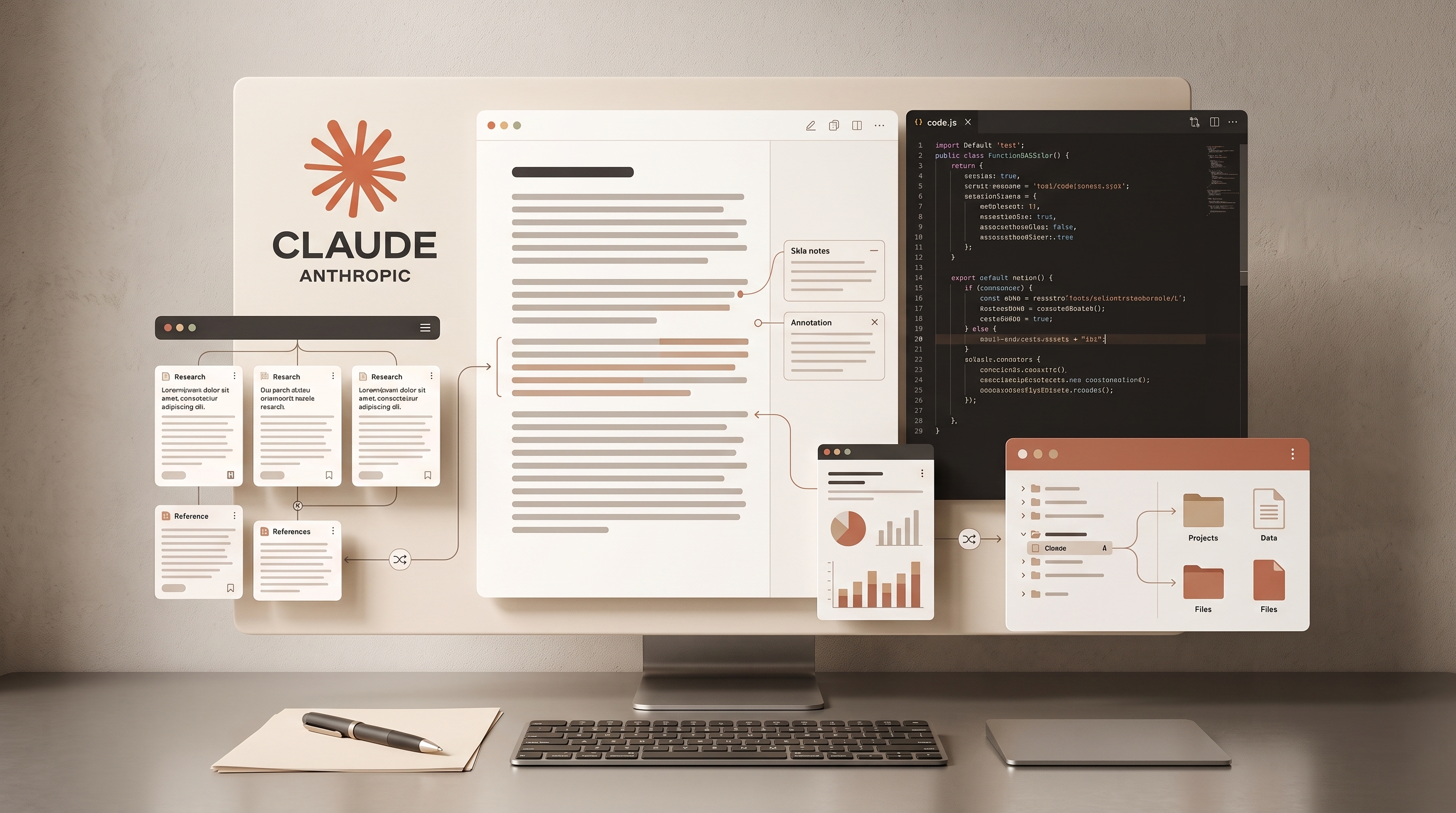
Claude is an AI assistant from Anthropic for writing, analysis, research, coding, and document work. Its strongest case is a person or team that wants careful long-form work, useful file handling, and a growing set of connected tools in one place. Its main catch is usage-based limits. Pro, Max, and Team are not unlimited, and extra usage can become a separate charge. This research-based review explains who should choose Claude, who should avoid it, and what to check before paying.

Product profile
Claude
See Claude’s BettrList score, current product facts, plans, platforms, and official link.
BettrList may earn a commission from some outbound product links. This does not affect the product score, recommendation, pros, cons, or alternatives in this review.
Claude review: quick verdict
Claude is recommended with caveats. It is a strong fit for writers, researchers, developers, consultants, and small teams that value clear prose, long document work, coding help, and practical connections to services such as Slack, Google Workspace, and Linear. The Free plan is useful for learning the workflow. Pro is the sensible individual starting point for regular work, while Team adds shared administration and business data controls. The decision is not universal because limits still apply, personal plans need deliberate privacy settings, and serious usage can require Max or extra usage credits.
- Best reason to choose Claude: it combines strong writing and analysis workflows with projects, artifacts, file creation, coding, research, and connectors.
- Main weakness: the useful plan depends on how often you use Claude and which models or tools your work needs. A paid plan can still stop or ask for extra usage.
- Best starting point: Free for occasional use, Pro for a regular individual workflow, and Team when the organization needs shared controls rather than personal accounts.
- What to check first: your expected usage, whether client or company data can enter a consumer plan, and whether API access is what you actually need.
What is Claude?
Claude is a conversational AI product with web, desktop, iOS, and Android access. The core experience is a chat where you can ask for explanations, drafts, analysis, code, or structured output. Around that chat are Projects for keeping related conversations and documents together, Artifacts for showing a separate working output, file creation and code execution, web search, Research, memory, and connectors that can retrieve information or take actions in external services.
Anthropic also sells Claude Code and an API platform. A Claude subscription is not the same as API credits. The app plans are for people using Claude through Anthropic’s apps. Developers who want to put Claude inside their own software need a separate platform account and usage budget. That boundary matters before a team treats a consumer or Team subscription as an application integration plan.
Who is Claude designed for?
Claude is designed for people whose work is mostly language, documents, research, code, or connected business information. A solo consultant can turn notes into a client brief. A writer can work through a long draft and keep a project context. A developer can use Claude Code alongside a controlled repository. A small agency can use Team for shared billing, administration, and organization-wide search.
It is a weaker fit for someone who only needs occasional spelling correction and does not want another subscription. It is also a poor default for a regulated organization that has not approved consumer AI accounts, connected apps, cloud processing, and data retention. Enterprise can provide more controls, but it is a different procurement decision, not an automatic upgrade for every small team.
Claude features that matter in practice
Writing, analysis, and long documents
Claude’s value starts with ordinary conversation. It can rewrite, summarize, compare, explain, outline, and turn a source pack into a usable draft. Projects give recurring work a shared context for chats and documents. This is useful when a consultant, editor, or product team keeps returning to the same client, policy, or product area. The limitation is that a project still needs a clear source of truth and human review. A longer context window does not guarantee that every detail will be interpreted correctly.
Artifacts and file work
Artifacts put a generated document, code sample, visual, or interactive output beside the conversation. Claude can create and edit Word, Excel, PowerPoint, and PDF files, and it can analyze CSV and other structured data. The practical benefit is that the output is easier to inspect and download than a long chat message. The trade-off is that files are still generated work. Check calculations, formatting, citations, formulas, and any claim that will reach a client or customer. The published help guidance also gives a 30 MB maximum file size for uploads and downloads.
Web search and Research
Claude’s web search is useful for current facts and direct source links. Research is a deeper workflow for gathering and synthesizing several sources. This helps with a market brief, a product comparison, or a literature scan where the reader needs more than a single answer. The limitation is the same as with other generative research tools: citations make checking easier, but they do not make every conclusion correct. Use the original sources for important claims and record the date checked.
Coding and Claude Code
Claude includes coding help in the app, and paid plans include Claude Code. Claude Code is aimed at terminal-based repository work rather than only asking for a code snippet in chat. It can be useful for a developer who wants help understanding a codebase, planning a change, or reviewing an implementation. The key trade-off is permission and review. Keep production credentials out of the environment, limit repository access, and review every proposed change before it reaches a release branch.
Connectors and external tools
Connectors let Claude work with external services such as Slack, Google Drive, Gmail, Google Calendar, and Linear. The connector uses the permissions of the connected account, so it cannot see a file or channel that account cannot access. Some connectors can search, draft, create issues, or take other actions. That can remove copy-and-paste work, but every connector adds another permission and privacy boundary. Start with read-only workflows, then approve write actions only when the team understands what Claude can change.
How Claude works in practice
A sensible Claude workflow has four steps. Start with a clear task and the source material. Choose a Project when the work continues across several conversations. Use web search or Research when current external evidence matters. Then review the result against the original material before sharing or acting on it. The best use is usually a faster first draft, first analysis, or first research pass while a person owns the final decision.
- Create one project around a real repeated workflow rather than uploading every file you have.
- Decide whether Claude should only read connected sources or also create drafts, issues, events, and other changes.
- Use Incognito chats for temporary work when you do not want the conversation saved to chat history or memory.
- Check the usage page before a deadline. Paid plans have session or weekly limits, and extra usage can be separately billed.
Ease of use and setup
Claude is easy to start because the first workflow is just a prompt. The deeper setup is optional but important for regular work. You need to decide how projects are organized, which files are allowed, whether memory is useful, which connectors are trusted, and whether the model improvement setting fits the data you plan to enter. Team owners also need rules for connectors, roles, public projects, exports, and retention. Claude feels simple at the surface, but the governance layer grows with the account.
Claude pricing and plans
The prices below are the public USD prices checked on August 16, 2026. Prices shown by Anthropic do not include applicable tax and can change. Pro is $17 per month with an annual subscription paid upfront at $200, or $20 when billed monthly. Max is $100 per month for 5x Pro usage or $200 for 20x Pro usage and is monthly only. Team standard seats are $20 per user per month when billed annually or $25 monthly. Team premium seats are $100 annually or $125 monthly and provide 5x the usage of a standard seat. Team requires at least two members. Enterprise lists a $20 seat price plus usage at API rates, with the final setup and controls handled through the enterprise plan.
Claude plans checked August 16, 2026| Plan | Price and billing | Best use | Important limits or upgrade triggers |
| Free | $0 per user per month | Trying Claude, occasional writing, light research, and simple file work | Usage and feature access are limited. Upgrade when interruptions affect repeated work. |
| Pro | $17/month annual equivalent ($200 upfront) or $20/month monthly | Regular individual writing, research, document, and coding work | More usage, Research, unlimited projects, more models, Claude Code, and Cowork. Usage limits still apply. |
| Max 5x or 20x | $100 or $200 per month, monthly only | Heavy individual use of Claude and Claude Code | 5x or 20x Pro usage, weekly limits, and possible model or feature caps still apply. |
| Team standard | $20/user/month annual or $25 monthly | A team that needs a shared workspace, billing, SSO, and admin controls | Two-seat minimum. Enterprise search, connectors, and no training on content by default. |
| Team premium | $100/user/month annual or $125 monthly | A team with a few heavy users | 5x standard-seat usage. Mix seat types, but model the cost before rollout. |
| Enterprise | $20/seat plus usage at API rates | Large organizations needing more governance and contracted controls | SCIM, audit logs, compliance API, retention controls, network controls, and HIPAA-ready offering availability. |
Do not read Max or Team as unlimited. Anthropic documents session, weekly, monthly, model, and feature limits. Paid users can enable usage credits and continue at standard API rates, which creates a second cost on top of the subscription.
Free plan and free trial
Claude has a real Free plan, so the practical trial is to use Claude with one of your own tasks. The current pricing page lists web, mobile, desktop, web search, memory, file creation, code execution, connectors, and extended thinking for Free, but the comparison table and help documentation still apply limits to usage and some advanced capabilities. Pro has an annual option and a monthly option. Anthropic does not present Max as a standard free trial, so do not assume a paid plan will be free before renewal.
Important limits and upgrade triggers
- You hit Pro usage limits often enough that a five-hour session reset interrupts real work.
- You need more capacity for Claude Code, Cowork, Research, or long-running document workflows and can justify Max.
- A few team members are heavy users. Team can mix standard and premium seats, but the premium price is substantial.
- You enable usage credits. Extra work is then billed at standard API rates, so set a monthly spend limit before allowing it.
- You need organization-wide search, SSO, admin roles, or default no-training treatment for business content.
- You need API calls inside your own product. Claude app subscriptions do not replace an Anthropic API account and budget.
Integrations and compatibility
Claude is available on the web, iOS, Android, and desktop, with Claude Code and other experiences around the main app. Official connector documentation covers Slack, Google Workspace, Linear, and custom remote MCP services. Google Workspace connectors can search Gmail, Google Calendar, and Google Drive, and can create Gmail drafts without sending them. Availability, permissions, write actions, and organization approval can vary by service and plan.
For a small team, connectors can save time because people can ask questions in natural language instead of searching several systems. They should not replace the source system. Keep the original record in Slack, Drive, Linear, or the calendar, and make Claude’s role explicit. A connector that can write is a workflow automation with an AI decision layer, not just a search shortcut.
Security, privacy, and compliance
Anthropic’s consumer and commercial privacy rules are different. On Free, Pro, and Max, chats and coding sessions may be used to improve Claude if the user allows it, while Incognito chats are not used for training. Users can change the model improvement setting. Deleted standard chats are removed from backend systems within 30 days, while data retained for model improvement can have a longer retention period. This makes privacy settings and chat type important before entering client or personal information.
Anthropic says Team and Enterprise content is not used to train models by default. Team adds SSO, central administration, connector controls, enterprise search, and organization features. Anthropic’s published compliance information lists SOC 2 Type I and II, ISO 27001:2022, ISO/IEC 42001:2023, and a HIPAA-ready configuration with a BAA available for commercial products. These are useful signals, not a substitute for reviewing the exact plan, contract, data flows, retention rules, and approved integrations.
Do not use a personal Claude account for sensitive business work just because Anthropic publishes strong commercial security information. Choose the correct workspace, turn off or control model improvement where appropriate, review connector permissions, and involve security or legal teams for regulated data.
Support and documentation
Claude has a large Help Center with current articles for usage limits, privacy, connectors, plans, coding, and file work. Free users get documentation and the Fin support bot. Pro and Max users, Team and Enterprise owners, and Console admins can start with Fin and request Product Support through the support messenger. The trade-off is that there is no phone or live chat support for ordinary users, and non-owner team members may need an owner to escalate an issue. Keep the plan owner and support contact clear before a team rollout.
Claude pros and cons
- Pros: Strong coverage for writing, long documents, analysis, research, code, file creation, and connected work.
- Pros: The Free plan gives a genuine way to test Claude with a real workflow before paying.
- Pros: Projects, Artifacts, and connectors make recurring work more structured than a sequence of isolated chats.
- Pros: Team and Enterprise provide a clearer business path than asking employees to share personal accounts.
- Cons: Usage limits remain part of the product. Heavy users may need Max or extra usage credits on top of a subscription.
- Cons: Team pricing has a two-seat minimum and premium seats can become expensive when several people need more capacity.
- Cons: Consumer privacy settings require active decisions before sensitive material enters chats or connected workflows.
- Cons: Connector permissions and write actions add setup, governance, and review work that a simple chat does not need.
Best use cases
- A solo consultant turning interviews, notes, and source documents into clear client deliverables.
- A writer or editor who needs repeated work over long drafts and wants a project context.
- A developer who can use Claude Code in a controlled repository and review every change.
- A small agency that needs shared billing, SSO, organization search, and approved connectors.
Poor-fit use cases
- A light user who only needs occasional grammar help and does not want a recurring AI subscription.
- A regulated team that has not approved consumer AI plans, external connectors, or Anthropic’s retention model.
- A business that expects a Claude app subscription to include API usage for its own product.
- A team that needs stable, effectively unlimited usage but has not modelled Max, premium seats, or usage-credit costs.
Claude alternatives
Consider ChatGPT if you want a broader general-purpose workspace with images, voice, custom GPTs, and a large app ecosystem. Consider Gemini if your work is already centered on Google Workspace. Consider Perplexity if search and cited web research are the main job. Consider Microsoft Copilot if your organization is standardized on Microsoft 365. Compare current limits, data terms, regional access, and the actual workflow before switching. Model names and plan contents change too quickly for an old feature checklist to decide the purchase.
Who should choose Claude?
Choose Claude if your work benefits from careful writing, document analysis, coding, projects, artifacts, or connected business information. Start with Free and use one real task. Choose Pro when Claude becomes a regular individual tool. Choose Max only when Pro limits repeatedly block valuable work. Choose Team when the need is shared administration and business data controls, not merely more personal usage. Keep security review, usage budgets, and API requirements separate from the excitement of a capable model.
Final verdict
Claude earns a recommendation with caveats. It is a practical and capable choice for people who write, research, code, and work with documents. Its product shape is broader than a simple chat box, but that breadth creates more decisions around plans, usage, connectors, and privacy. Free is enough to test the basic fit. Pro is the most reasonable individual paid plan for regular work. Team is the better route for a small organization that needs shared controls. The next step is to test a real workflow, check the current usage page, and choose the least expensive plan that supports the work you actually repeat.