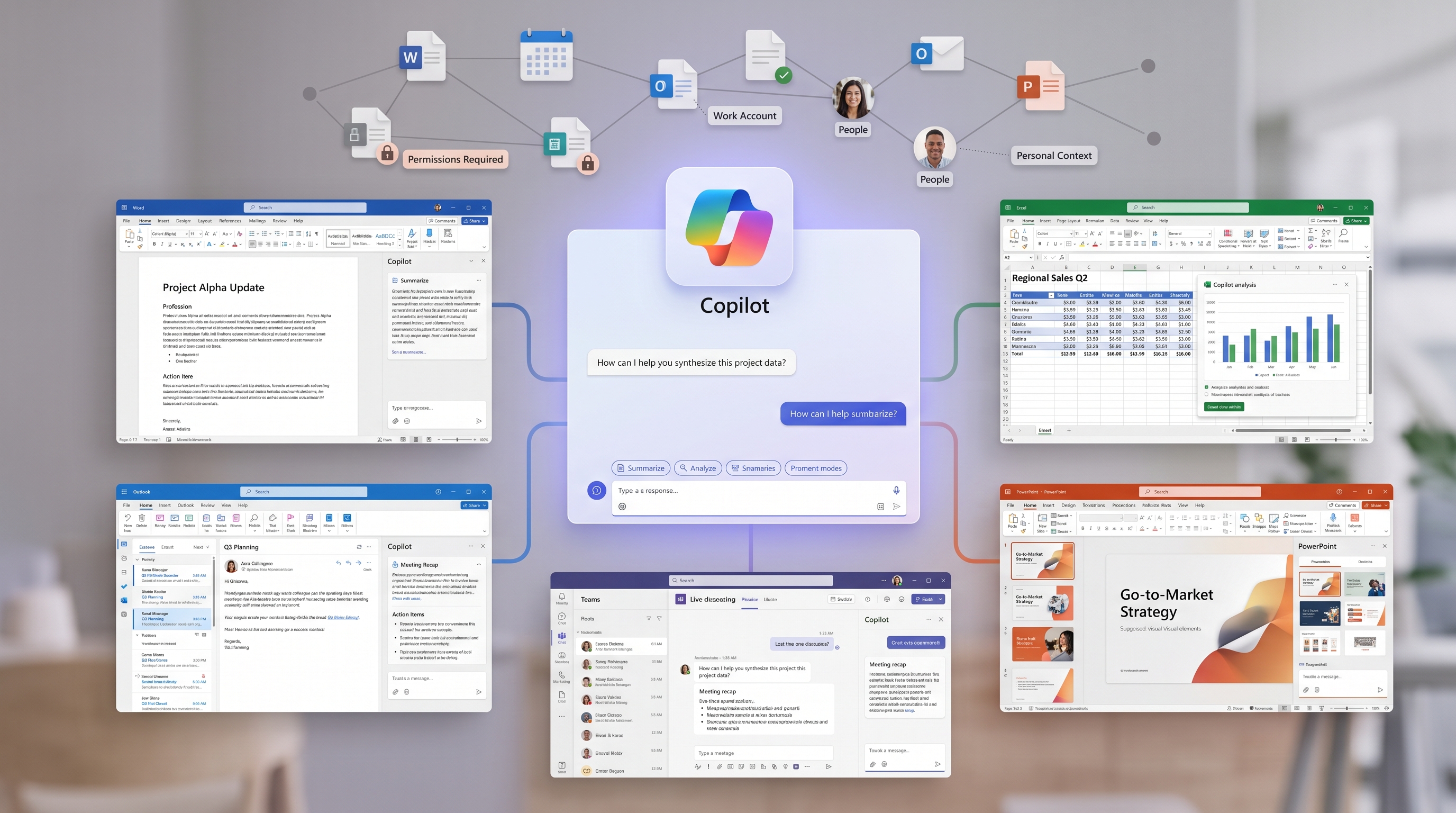
Microsoft Copilot is a family of AI tools rather than one single plan. The free version handles web-grounded chat, writing help, summaries, and image creation. Paid Microsoft 365 versions add Copilot inside Word, Excel, PowerPoint, Outlook, OneNote, and Teams, with access to work data depending on the license. That makes Copilot useful for Microsoft-heavy workflows, but the product name hides important differences in data access, billing, limits, and privacy.

Product profile
Microsoft Copilot
Check the existing Microsoft Copilot score, plan snapshot, platform coverage, and official product link on BettrList.
Research-based review: this article uses Microsoft pricing, product documentation, support pages, and security material checked on August 16, 2026. No private account, paid plan, or workflow was used for hands-on testing.
Microsoft Copilot review: quick verdict
Microsoft Copilot is recommended with caveats. The free version is a sensible starting point for general questions, web research, short writing tasks, and Edge page summaries. Microsoft 365 Copilot is more compelling for people and teams that already work in Word, Excel, Outlook, Teams, and SharePoint and will use AI in those tools often. It is not a universal choice because paid access is layered onto Microsoft subscriptions, AI limits vary by plan, and consumer and commercial data protections are not the same.
- Choose free Copilot first if you mainly need web answers, brainstorming, summaries, and occasional image creation.
- Choose a Microsoft 365 individual plan when you also need Office apps, OneDrive storage, and Copilot inside desktop documents.
- Choose Microsoft 365 Copilot for a business only when the team already has Microsoft 365, has a clear work-data use case, and can manage permissions and adoption.
- Avoid paying for Premium or a business add-on until you can name the repeated task that justifies the extra monthly cost.
What is Microsoft Copilot?
Microsoft Copilot is Microsoft’s conversational AI service. The free consumer version is available at copilot.com, in Windows, in Edge, and through mobile and desktop apps. Microsoft says it can answer questions using web search, help with writing and brainstorming, summarize content, and create images. Signing in adds conversation history, longer conversations, image creation, voice features, and other account-based capabilities.
The paid experiences sit inside Microsoft 365. Personal, Family, and Premium plans bring Copilot into selected Office apps for the subscription owner. Business users can get Microsoft 365 Copilot Chat with eligible Microsoft 365 licenses, while the paid Microsoft 365 Copilot add-on adds work-data grounding, deeper app features, agents, priority access, and administration tools. These are different buying decisions even though they share the Copilot name.
Who is Microsoft Copilot designed for?
Copilot is designed for people who want AI close to the work they already do. A freelancer can use the free service to outline a proposal or summarize a web page. A consultant with Microsoft 365 can draft in Word, ask Excel for help analyzing a sheet, and summarize Outlook threads without moving content into a separate chatbot. A small team can use Copilot Chat for web-grounded questions and add licensed work-data access when it has a clear need for tenant content.
The fit is weaker if you do not use Microsoft apps, want a single focused AI workspace, need predictable high-volume generation at the lowest price, or cannot put sensitive text into a cloud service. It is also a poor fit for a team that has not cleaned up SharePoint and Microsoft 365 permissions. Copilot follows existing permissions, but it cannot repair an organization that has already overshared files.
Microsoft Copilot features that matter in practice
Free chat, web search, and Edge context
Free Copilot covers the common first step: ask a question, draft text, brainstorm ideas, summarize a page, or create an image. Microsoft says the free version can use real-time web search and can summarize web pages in Edge. This is useful for quick research and everyday writing because it removes the need to open a separate tool. The trade-off is that web-grounded answers still need source checking, and availability and features can vary by region.
Copilot inside Microsoft 365 apps
The strongest product advantage is context inside Word, Excel, PowerPoint, Outlook, Teams, OneNote, Loop, and related services. Microsoft documents examples such as drafting and editing in Word, formula and analysis help in Excel, presentation creation in PowerPoint, email summaries in Outlook, and meeting summaries in Teams. This matters because the user can work beside the original document, spreadsheet, message, or meeting. It matters less if your work already happens in Google Workspace, Notion, a specialist CRM, or a plain text editor.
Work data, search, and agents
Licensed Microsoft 365 Copilot can use Microsoft Graph to ground answers in emails, chats, documents, meetings, and other data that the user is allowed to access. Microsoft also documents Copilot Search, connectors for external data, and agents that can use additional data sources or perform tasks. These capabilities can reduce time spent searching across a tenant. They also add administration work. A business needs clear permission ownership, agent review, usage rules, and a way to check whether generated answers are accurate before acting on them.
Microsoft Copilot experiences checked August 16, 2026| Experience | What it includes | Who benefits | Important limitation |
| Copilot free | Web-grounded chat, writing help, summaries, Edge features, and image creation | Anyone who wants to try AI or needs occasional web help | No Microsoft 365 work-data grounding; limits and availability vary |
| Microsoft 365 Personal, Family, or Premium | Copilot in selected apps plus OneDrive and Microsoft 365 benefits | A personal user who already needs Office apps and storage | AI benefits are for the subscription owner and usage limits apply |
| Microsoft 365 Copilot Chat | Enterprise-ready web-grounded chat for eligible business users | Teams with an eligible Microsoft 365 license and a cautious starting point | Work-data and advanced app access depend on license and admin setup |
| Microsoft 365 Copilot add-on | Work-data grounding, app features, agents, analytics, and priority access | Microsoft-heavy teams with repeatable work-data use cases | Per-user pricing, qualifying base license, permissions work, and adoption effort |
How Microsoft Copilot works in practice
The practical workflow is simple at the surface. The user opens Copilot in a browser, app, or Windows entry point, writes a prompt, reviews the answer, and asks for a revision. In a Microsoft 365 app, Copilot can use the current file and relevant organizational context. In Edge, it can use the current page, title, open tabs, and, where enabled, browser context. In Windows, Microsoft documents file search, screenshots, Vision, and access settings for file search and reading.
The real workflow is not one prompt followed by blind acceptance. A buyer should treat every answer as a draft, check citations and calculations, and protect confidential material. The more Copilot is connected to work data, the more useful it can become, but the cost of poor permissions and weak review also rises. The product can shorten routine work. It does not remove the need for human judgment.
Ease of use and setup
The free version is easy to start because it is available on the web and through familiar Microsoft entry points. A signed-in user gets more history and longer conversations. Individual Microsoft 365 access is also straightforward for the subscription owner, but the experience becomes more complicated when a Family subscription is shared because AI benefits do not follow every shared user. Business setup is a different project. Admins must confirm an eligible base license, assign Copilot access, review permissions, decide which agents are allowed, and prepare users to check outputs.
Microsoft’s documentation is extensive, but it is spread across consumer support, Microsoft Learn, admin pages, product terms, and plan comparison pages. That makes the product learnable rather than effortless. A solo user can start quickly. A business needs an owner for licensing, permissions, security, and adoption.
Microsoft Copilot pricing and plans
The prices below are US list prices checked on August 16, 2026. Microsoft separates consumer subscriptions from business licenses. Taxes, country availability, existing Microsoft 365 licenses, and promotional terms can change the total. Business add-on pricing is per user, and an eligible Microsoft 365 subscription is required. The current business page shows a promotional $18 per user/month price for annual Copilot Business subscriptions from July 1 through September 30, 2026, alongside a $21 standard annual price and a $25.20 monthly price. The promotion requires an annual commitment and applies to the first year only.
Representative Microsoft Copilot prices checked August 16, 2026| Plan | Price and billing | Main use | Important limits or upgrade trigger |
| Copilot free | $0; no subscription | Web chat, writing, summaries, Edge, and occasional images | No full Microsoft 365 app or work-data integration; limits vary |
| Microsoft 365 Premium | $19.99/month or $199.99/year; 1-month trial | One person who wants the highest individual Copilot allowance plus Office and storage | AI is for the subscription owner; annual billing saves about $40.
|
| Microsoft 365 Copilot Business | $18 promotional annual, $21 standard annual, or $25.20 monthly per user | Add Copilot to an eligible Microsoft 365 business plan | Annual commitment for annual price; monthly costs more; qualifying base license required |
| Business Standard with Copilot | $23.50/user/month paid yearly | Office apps, email, Teams, storage, and Copilot in one small-business bundle | Annual auto-renewal; price is per user and regional terms can differ |
| Business Premium with Copilot | $32/user/month paid yearly or $38.40 monthly | Copilot plus stronger identity, device, and security features | Higher cost; useful security controls still need correct configuration |
Free plan and trial
Free Copilot is the right first test for most individuals. It gives you a real way to judge whether web answers, writing support, summaries, and image creation solve a recurring problem. Microsoft 365 Personal, Family, and Premium plans include a one-month trial on the individual pricing page. The trial requires a payment method and converts to a paid subscription unless it is canceled. Premium has the highest individual allowance, but that does not make it good value for a person who only asks a few questions each week.
Important limits and upgrade triggers
- AI usage is not one simple unlimited meter. Microsoft documents feature limits and AI credits, and the allowances differ between Personal, Family, and Premium.
- Family and Premium sharing is easy to misunderstand. The subscription can cover several people, but Copilot in desktop apps and other AI benefits are limited to the subscription owner.
- Business Copilot is priced per user and requires an eligible Microsoft 365 plan. A small team must budget for both the base Microsoft 365 subscription and the Copilot layer unless it chooses a bundle.
- Agents, connectors, work-data access, analytics, and admin controls can create setup and governance work even when the license includes the capability.
- Web queries have separate data-handling considerations from tenant data. Microsoft says web search uses Bing and has different commitments from Microsoft 365 customer data.
Integrations and compatibility
Copilot’s built-in compatibility is strongest across Microsoft’s own products. Microsoft documents Word, Excel, PowerPoint, Outlook, Teams, OneNote, Loop, Microsoft Graph, SharePoint, OneDrive, and Copilot Search. Business users can extend the experience with Graph connectors and agents for external services, subject to permissions and admin approval. Microsoft 365 Copilot Chat supports Edge, Chrome, Firefox, and Safari, while the Edge side pane is specific to Edge. Microsoft’s FAQ says Copilot Chat does not offer a general API. Teams that need deep custom automation should evaluate Copilot Studio or another API-based AI product separately.
Security, privacy, and compliance
For Microsoft 365 commercial customers, Microsoft says Copilot respects existing permissions, identity controls, sensitivity labels, retention policies, audit controls, and data residency commitments. It states that prompts, responses, and Microsoft Graph data are not used to train the foundation models used by Microsoft 365 Copilot. Microsoft also documents encryption, Conditional Access, multifactor authentication, Purview controls, and enterprise data protection. Those are meaningful strengths for organizations already governed by Microsoft 365.
Do not transfer those commercial claims directly to the free consumer service. Microsoft’s consumer privacy FAQ says conversations are saved by default for 18 months and gives users controls for personalization and model training. It also warns users not to provide confidential or sensitive personal data that they would not want used for the purposes explained in the FAQ and privacy statement. The practical rule is simple: identify which Copilot experience you are using before deciding what data to enter.
Support and documentation
Microsoft has much more public documentation than most consumer AI tools. The support pages explain free and paid experiences, Windows and Edge behavior, AI credits, and account settings. Microsoft Learn covers business deployment, data flow, security, compliance, connectors, and agents. The weakness is fragmentation. A reader can easily land on a consumer page while researching a business license, or confuse Copilot Chat with the licensed Microsoft 365 Copilot product. Good documentation exists, but buyers need to read the plan and identity context carefully.
Main strengths
- The free version has a low-risk entry point for web-grounded questions, writing help, summaries, and Edge page analysis.
- Microsoft 365 integration can save context switching for people who already live in Word, Excel, Outlook, PowerPoint, and Teams.
- Commercial customers can build on existing Microsoft identity, permission, compliance, retention, audit, and data-residency controls.
- Windows and Edge entry points make Copilot available close to files, pages, and everyday desktop tasks.
Main weaknesses
- The Copilot name covers several products with different data access, limits, and licensing rules, which makes comparison harder than it should be.
- Paid business access can become expensive because it is per user and may sit on top of a separate Microsoft 365 subscription.
- AI features in Family and Premium are limited to the subscription owner, so sharing the subscription does not share the full Copilot benefit.
- Business value depends on permission hygiene, admin setup, training, and output review. The license does not remove those operating costs.
- There is no general Copilot Chat API, so teams that need product-level automation may need another service or Copilot Studio.
Best use cases and poor-fit use cases
Microsoft Copilot works best when it is attached to an existing workflow. Examples include drafting and revising client documents in Word, summarizing a long Outlook thread, asking Excel to explain or explore a dataset, preparing a first-pass presentation from source material, and giving a small Microsoft 365 team a governed chat entry point. The common factor is not the novelty of the AI. It is the value of having the AI beside the source work.
It is a poor fit for a person who only needs occasional general chat and does not need Microsoft 365. It is also a poor fit for a team that uses Google Workspace or specialist tools as its system of record and would need to rebuild context through connectors. Security-sensitive teams should not buy it based on a generic enterprise badge. They should verify the exact license, tenant configuration, data handling of web queries, and agent terms for their use case.
Microsoft Copilot alternatives
ChatGPT is the more natural alternative for a general-purpose AI workspace with broad custom workflows and a separate product ecosystem. Claude is worth considering when long-form writing, document analysis, and a restrained chat experience matter more than deep Office integration. Google Gemini is the closer alternative for teams already centered on Gmail, Docs, Sheets, and Google Drive. Perplexity is more focused on research and cited web answers. The right alternative depends on where your source work lives. If your files and communication already live in Microsoft 365, switching tools may give up more context than it gains.
Final verdict
Microsoft Copilot earns a recommended-with-caveats decision. Start with free Copilot if you want to test the basic chat and web workflow. Move to an individual Microsoft 365 plan only if you also need its Office apps, storage, and owner-level Copilot access. For a business, start with the included Copilot Chat available through an eligible Microsoft 365 license, then pilot paid Copilot with a small group and one measurable workflow. The product is strongest when Microsoft 365 is already the place where work happens. It is weaker when buyers are paying for AI without a clear Microsoft workflow to improve.